
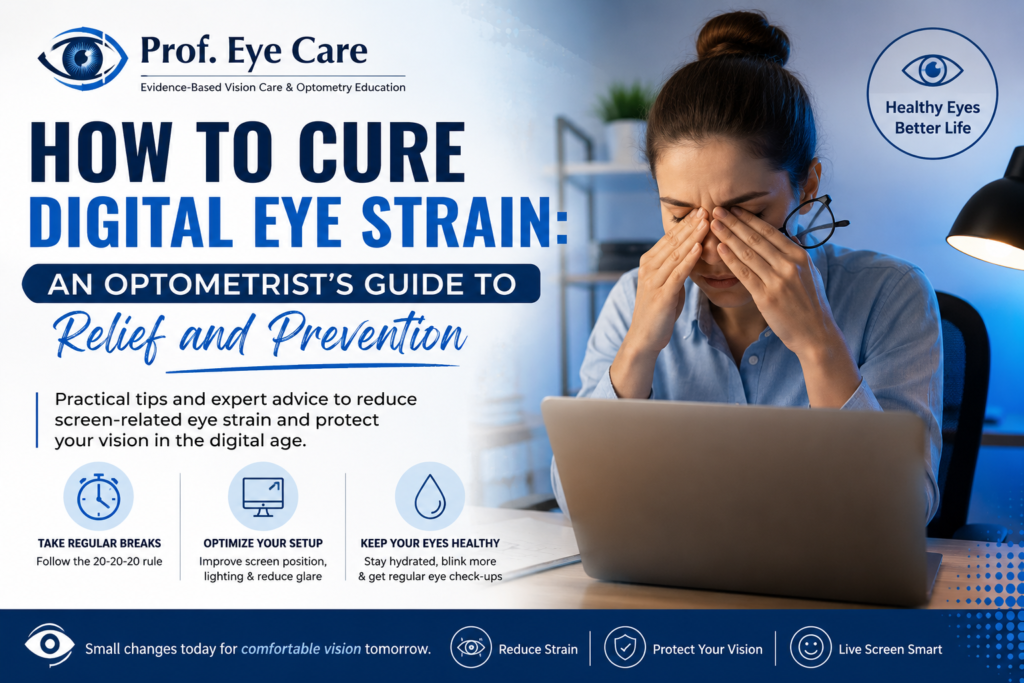
One day during my class, one of my students asked me if he was feeling tired and eye pain after a long period of screen time.
So my question is, have you ever finished a long day at your smartphone or computer and felt like your eyes had run a marathon?
Perhaps your eyes felt tired, dry, blurry, or even slightly irritated. Maybe you found yourself rubbing them repeatedly or struggling to focus after hours of staring at a screen.
If this sounds familiar, you’re certainly not alone.
In today’s digital world, screens are everywhere. We work on laptops, scroll through smartphones, attend online meetings, watch television, and even read books on digital devices. While technology has made our lives easier, it has also introduced a modern visual problem known as digital eye strain.
One of the most common questions I hear as an Optometrist is: “Digital eye strain—how to cure it?”
The good news is that digital eye strain is usually manageable and often preventable. By understanding why it happens and adopting a few simple habits, you can reduce discomfort and protect your eyes long term.
Let’s explore how.
What do you think ? What Is Digital Eye Strain?
Digital eye strain, also known as computer vision syndrome, refers to a collection of eye and vision-related symptoms caused by prolonged use of digital devices.
Think of your eyes like a car engine.
A short drive may not cause issues. But if you drive for hours without a break, the engine heats up and loses efficiency. Similarly, when your eyes focus intensely on screens for long periods, they become fatigued.
Common symptoms that occur due to long screen time include:
- Tired eyes
- Dryness or irritation
- Blurred vision
- Headaches
- Neck and shoulder pain
- Difficulty focusing
- Increased sensitivity to light
These symptoms often worsen after hours of screen use and improve with rest.
Why Does Digital Eye Strain Happen?
To understand how to cure digital eye strain, we first need to know what causes it, right?
When looking at screens, people tend to blink less frequently. Blinking is the eye’s natural cleaning and lubrication system. Imagine the windshield wipers of a car. Without them, dust and debris quickly accumulate.
According to research, we normally blink 15–20 times per minute. During study time, screen use, and near work , this drops significantly, leading to dry, uncomfortable eyes.
Screens also demand constant focusing. Unlike printed text, digital characters are made of pixels with imperfect edges. Your eyes continuously adjust to maintain focus, causing visual fatigue over time.
Now let’s discuss a few practical solutions.
Tip 1: Give Your Eyes Regular Breaks
Follow the 20-20-20 Rule
One of the simplest and most effective ways to reduce digital eye strain is the 20-20-20 rule.
Every 20 minutes:
- Look at something 20 feet away.
- For at least 20 seconds
Think of this as a short vacation for your eyes.
Imagine carrying a heavy backpack all day. If you never put it down, your shoulders become sore. The same applies to your focusing muscles. Regular breaks let them relax and recover.
How can you make it a Habit?
- Set a timer on your phone.
- Use reminder applications.
- Take a brief pause during work meetings.
- Look out of a window whenever possible.
Even a few seconds of distance viewing can make a difference.
Incorporate Blink Breaks
In my professional life, I have seen many people who don’t realize how little they blink while using screens, even though it’s true for me as well.
Try this simple exercise:
- Close your eyes gently.
- Pause for two seconds.
- Open them slowly.
- Repeat five times.
It refreshes your eyes like a splash of water.
Tip 2: Improve Your Screen Environment

Adjust Screen Position
Your screen should ideally be positioned:
- About an arm’s length away
- Slightly below eye level
Think about reading a book. Most people hold it slightly below their line of sight rather than directly in front of their eyes.
When screens are too high, your eyes stay more open, increasing tear evaporation and dryness.
Reduce Glare
Glare is a hidden cause of visual discomfort.
Imagine driving at night with bright headlights shining directly into your eyes. It becomes difficult and tiring to see clearly.
Glare from windows, overhead lights, and reflective screens forces your visual system to work harder.
So, here are a few tips to reduce glare:
- Position screens away from windows.
- Use curtains or blinds when needed.
- Adjust screen brightness.
- Consider anti-reflective coatings on spectacles.
Optimize Lighting
Sometimes my students say, “Sir, without light we can’t see objects, so obviously bright light should help us see better.” Is it true? like them. Many believe brighter lighting is always better.
Excessive brightness can be as problematic as insufficient lighting.
Your screen should blend comfortably with the surrounding environment rather than appearing dramatically brighter or darker.
A well-balanced workspace allows your eyes to work more efficiently and comfortably.
Tip 3: Keep Your Eyes Comfortable and Healthy
Stay Hydrated
Your eyes depend on a healthy tear film to remain comfortable.
Think of the tear film as a protective coating, like oil, that keeps machinery running smoothly. Without lubrication, friction increases and performance declines. The day supports overall tear production and eye comfort.
Use Artificial Tears When Necessary
For individuals experiencing significant dryness, preservative-free lubricating eye drops may provide relief.
These drops act like a moisturizing lotion for the surface of the eye.
However, persistent symptoms should always be evaluated by an eye care professional to identify underlying causes.
Get Your Vision Checked Regularly
Many assume screen discomfort is caused solely by excessive screen time.
In reality, uncorrected vision problems often contribute significantly.
Even small refractive errors can force your eyes to work harder than they need to.
Imagine reading a book with slightly smudged glasses. You can still read, but it takes extra effort. Over time, that effort becomes exhausting.
You never know that a comprehensive eye examination can identify many eye-related problems, like:
- Uncorrected refractive errors
- Dry eye disease
- Binocular vision problems
- Accommodation issues
- Other ocular conditions
So, if we can address these factors, it often significantly improves symptoms.
Consider Specialized Computer Glasses
Depending on your visual needs, your Optometrist may recommend computer-specific spectacles.
These specialized spectacle lenses are designed to provide comfortable and smooth focusing at screen distances and may reduce visual stress during prolonged digital work.
Not everyone needs them, but frequent computer users may find them highly beneficial.
It’s important to know when you need professional help
In my opinion, everyone should have their family optometrist, to whom they discuss their eye-related problems. Most cases of digital eye strain improve with lifestyle modifications; some symptoms warrant professional evaluation.
If you don’t have the above option , then book an appointment and consult an Optometrist if you experience:
- Persistent blurred vision
- Frequent headaches
- Double vision
- Severe dryness
- Eye pain
- Symptoms that persist despite breaks
Don’t ignore it. If your eyes may be signaling an underlying condition that requires attention.
Conclusion
If you’ve been searching for how to cure digital eye strain, remember that Prevention is better than cure, and there is rarely a single magic solution.
Instead, relief comes from a combination of healthy habits, proper screen ergonomics, regular breaks, and routine eye examinations.
Think of eye care like maintaining a garden. You cannot water a plant once and expect it to thrive forever. Consistent care produces the best results.
Before I suggest only IT professionals, after COVID I want to suggest that everyone who uses a screen follow the 20-20-20 rule, improve their workspace, reduce glare, stay hydrated, and schedule regular eye examinations. You can dramatically reduce digital eye strain and enjoy more comfortable vision throughout the day. Without saying anything, your eyes work hard for you every day. Give them the right care they deserve, and they will continue to serve you well for years to come.
Author: Prof. Debapriyo Chatterjee
Assistant Professor of Optometry
Founder, Prof. Eye Care
Disclaimer: This article is intended for educational purposes only and should not be considered medical advice. Consult a qualified eye care professional for personalized diagnosis and treatment.
To know about Blue light filter glasses click here